Profile cutting and milling machines turn aluminum, steel, and composite stock into precise components. Their rotating cutters, saw blades, clamps, and moving axes can also create serious hazards. A hand near an exposed tool, or a workpiece that shifts during cutting, can cause injury in seconds. Small setup decisions matter.
The scale of workplace risk is not theoretical. The U.S. Bureau of Labor Statistics reported 2.6 million nonfatal workplace injuries and illnesses in private industry for 2023. That figure covers many occupations, not profile machining alone, but it shows why prevention deserves attention. OSHA’s machine-guarding rule, 29 CFR 1910.212, requires guarding against hazards such as points of operation and rotating parts. ANSI B11.19 also provides recognized guidance on risk-reduction measures. The exact requirements depend on the machine, its use, and the applicable jurisdiction.
What safety standards apply to profile cutting and milling machines? A reliable answer starts with a machine-specific risk assessment, not a generic checklist. Inspectors and operators should consider interlocked guards, emergency stops, secure clamping, safe tool changes, and clear work instructions. Training matters, too. A guard can be bypassed or poorly positioned; that practical detail is easy to miss. Standards help manufacturers and employers build safer systems, but they cannot replace careful setup or routine inspection. They also do not eliminate risk. This introduction sets out why documented safeguards, competent operation, and evidence-based maintenance belong at the center of profile-machine safety.
What Profile Cutting Machines Do and How They Operate
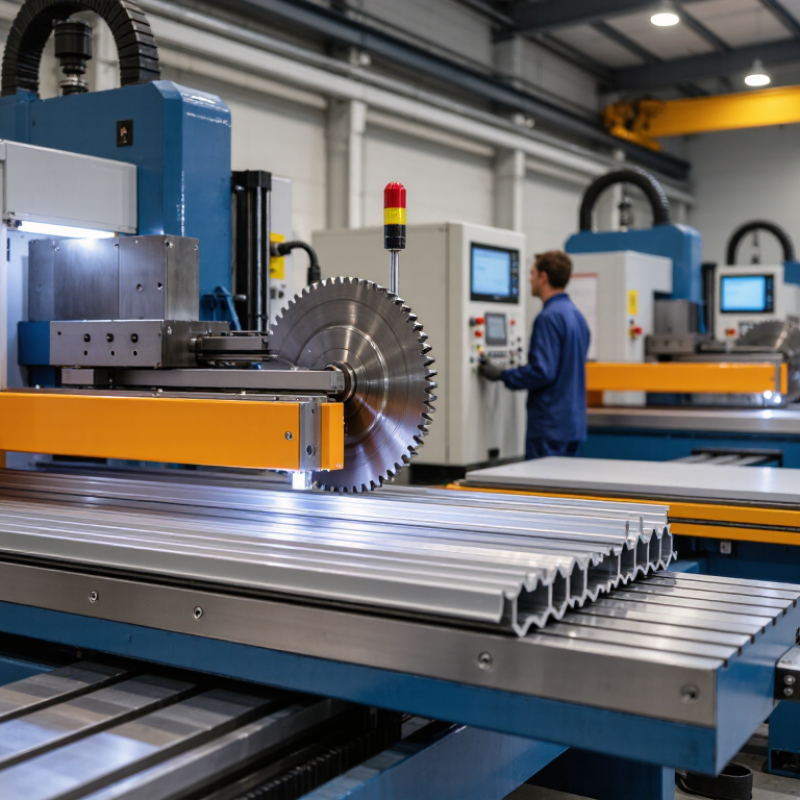
Profile cutting machines shape long sections of material, such as metal bars, tubes, and structural extrusions. Depending on the design, they may use a saw blade, abrasive wheel, or other cutting tool. The operator places the profile on a support bed, aligns it against a stop, and secures it with clamps. Then the machine moves the cutting head or feeds the material through the tool.
Some machines rely on manual controls; others use programmed dimensions and repeatable feed settings. A typical cycle includes positioning, clamping, cutting, and removing the finished piece. A clear display can help, but it does not replace checking the material and setup. A slightly skewed profile may shift under pressure. Small detail, big difference.
Safety standards address the hazards built into that process. A guarded cutting zone helps contain contact and flying chips, while interlocks can stop motion when access panels open. Emergency stops, stable work supports, and suitable chip or dust controls also matter. The exact protections depend on the machine and material. Real workshops are not always tidy, and setups can vary from one job to the next. That makes practical training and consistent checks important, not just paperwork. A machine should be understood before it is operated.
Hazards That Can Arise During Profile Cutting
Profile cutting can look controlled from a distance, but the cutting zone is unforgiving.
A blade or abrasive wheel can catch loose sleeves, gloves, or hair. Hands may also enter danger areas while positioning long profiles or clearing offcuts. A small adjustment can become a serious mistake.
The material creates hazards too. Sharp edges can slice fingers after cutting, while flying chips may injure eyes or skin. Clamps that are poorly set can let a profile shift or kick back. Long sections may sag, twist, or strike nearby workers. Noise and metal dust can build up during repeated cuts, especially in enclosed work areas. Eye protection matters. So does good ventilation.
Safety standards help guide guarding, emergency stops, clamping, and routine inspection, but a checklist cannot replace careful work. Operators need training for the specific machine and material. Before a cut, check that guards are in place, the profile is secured, and the work area is clear. Isolate power before maintenance or clearing a jam. It is easy to treat familiar tasks as harmless; that confidence deserves a second look, because even a clean cut can leave a dangerous edge.
How Safety Standards Reduce Risks to Operators
Profile cutting machines can expose operators to fast-moving blades, sharp offcuts, flying particles, and unexpected movement of long profiles. Safety standards reduce these hazards by turning general precautions into repeatable design and work practices. A fixed guard can keep hands away from the cutting zone, while an interlocked cover can stop motion when opened. That pause matters. Standards may also address secure clamping, clear sightlines, emergency stops, and controls placed within easy reach. Near the machine, extraction and suitable protective equipment can limit exposure to dust and chips. No detail is trivial.
Good procedures explain how to position and clamp a profile, keep hands clear, and remove offcuts only after the blade stops. Operators also need practical training, not just a signed form. They should recognize unusual vibration, damaged guards, or a loose clamp and know when to stop work. Regular checks can reveal worn components before they fail, though inspections cannot predict every problem. No checklist catches everything. Different materials and setups create different risks, so controls should fit the actual task. A safety standard helps make safer behavior consistent, but it cannot replace attentive work or sound judgment.
Why Do Profile Cutting Machines Need Safety Standards? — How Safety Standards Reduce Risks to Operators
| Hazard |
Safety measure |
Relevant standard or requirement |
How it reduces risk to operators |
| Contact with moving blades, cutting heads, or feed mechanisms |
Use fixed or interlocked guards around hazardous moving parts; prevent operation when an interlocked guard is open. |
OSHA 29 CFR 1910.212; ISO 14119 |
Separates operators from dangerous motion during normal operation and helps prevent access to the cutting zone. |
| Unexpected startup during cleaning, adjustment, or maintenance |
Isolate energy sources and apply lockout/tagout procedures before servicing; verify isolation before work begins. |
OSHA 29 CFR 1910.147 |
Reduces the chance that a machine will start or release stored energy while someone is working on it. |
| Faults in safety-related controls |
Assess control-system risks and design safety functions, such as guard interlocks and monitored stops, to an appropriate performance level. |
ISO 12100; ISO 13849-1 |
Supports systematic risk reduction and helps ensure that safety functions are designed for the hazards and reliability required. |
| Delayed response to an emergency |
Provide accessible emergency-stop devices and ensure they remain available during operation. |
ISO 13850 |
Allows an operator to initiate a stop quickly when a hazardous situation occurs. An emergency stop does not replace guards or energy isolation. |
| Electric shock, burns, or fire from electrical equipment |
Use suitable electrical installations, enclosures, wiring, and maintenance practices; inspect equipment for damage. |
OSHA 29 CFR 1910 Subpart S, including 1910.303 |
Helps prevent exposure to live parts and reduces risks associated with electrical faults and damaged equipment. |
| Flying chips, sparks, sharp offcuts, or fragments |
Use appropriate guarding and eye or face protection based on the cutting process and the task. |
OSHA 29 CFR 1910.212 and 1910.132 |
Guarding limits exposure at the source, while task-appropriate personal protective equipment provides an additional layer of protection. |
| High noise during cutting |
Assess workplace noise exposure and apply feasible exposure controls; provide hearing protection when required. |
OSHA 29 CFR 1910.95 |
Helps limit harmful noise exposure and supports measures such as quieter processes, engineering controls, and hearing conservation. |
Applicable requirements depend on the machine design, cutting process, workplace, and jurisdiction. Risk assessment and machine instructions should be used to select safeguards; no single standard or control eliminates every hazard.
Key Safeguards and Requirements in Safety Standards
Profile cutting machines combine moving blades, feed rollers, clamps, and sometimes automated loading.
A hand near a cutting head can be injured in seconds. Safety standards translate these hazards into practical design and operating requirements. They commonly address fixed or interlocked guards, safe access points, emergency stops, and controls that prevent unexpected restart. Guard openings should limit reach toward dangerous motion, while visibility lets operators check alignment without leaning into the work zone.
Simple details matter.
Emergency-stop buttons should be reachable from normal work positions, not hidden behind stock or scrap.
Requirements also cover electrical protection, clear instructions, training, and maintenance procedures. Before clearing a jam or changing a blade, workers need a reliable way to isolate energy and confirm motion has stopped. Risk assessments should account for profile length, material, clamping method, and production speed; a setup safe for short pieces may not suit long extrusions. Noise, sharp offcuts, and airborne debris deserve attention too. Standards vary by jurisdiction and machine type, so check the applicable technical requirements rather than relying on a generic checklist. Guards can feel inconvenient. That concern should be investigated, not ignored. Poorly placed guards may invite workarounds, so operators should help test access and visibility during setup reviews.
How Standards Support Consistent and Responsible Machine Use
Profile cutting machines produce repeatable lengths, yet each cycle brings moving blades, clamps, and sharp offcuts. Standards make safe operation less dependent on memory. ISO 12100 provides a framework for machinery risk assessment, while IEC 60204-1 addresses electrical equipment and control systems. These references help teams assess guarding, interlocks, emergency stops, and operator access before production begins. Small details matter.
The U.S. Bureau of Labor Statistics reported 3.3 recordable injury cases per 100 full-time equivalent workers in manufacturing in 2023, compared with 2.4 across private industry. This sector-wide figure does not measure profile-cutting machines alone. Still, it shows why routine controls deserve attention. At a saw station, clear procedures can define when stock is clamped, where hands stay, and how jams are cleared after energy is isolated. Consistent checks may catch a loose guard or drifting stop before uneven cuts lead to scrap or risky adjustments.
Standards give operators, maintenance staff, and supervisors a shared reference point. Training should match the actual machine, material, and cutting method; a paper checklist cannot catch every awkward reach. That limitation matters. Teams still need to review near misses and verify safeguards after repairs or tooling changes. Good systems leave room for judgment, too.
Conclusion
Profile cutting machines shape and trim materials by guiding a cutting tool along a planned path, while profile milling machines remove material to create precise contours. Their moving parts, sharp tools, heat, noise, dust, and possible material ejection can expose operators to injury or equipment damage, particularly during setup, adjustment, or maintenance. Understanding these hazards is essential to using the machines safely and consistently.
What safety standards apply to profile cutting and milling machines? Applicable standards generally set expectations for risk assessment, guarding, emergency stops, safe controls, electrical protection, operating instructions, and maintenance procedures. Safeguards should match the machine’s design and the tasks being performed, and operators should receive appropriate training and use suitable protective equipment. By combining engineered protections with clear procedures and regular checks, safety standards help reduce preventable risks, support reliable machine operation, and encourage responsible use throughout the machine’s working life.
 Zhixing Machine
