Zhixing Machine
Choosing the right Hydraulic Punching Machine can significantly impact your productivity. Many factors contribute to your decision. It’s essential to understand your specific needs before selecting a machine.
Consider the type of materials you will be working with. Different machines provide various capacities and features. A machine suitable for steel may not work well for aluminum. Researching specifications helps ensure optimal performance.
User reviews and expert recommendations are valuable resources. They can highlight strengths and weaknesses of various models. However, always evaluate the context of their use. What works for one project may not fit another. Take time to reflect on your unique requirements.
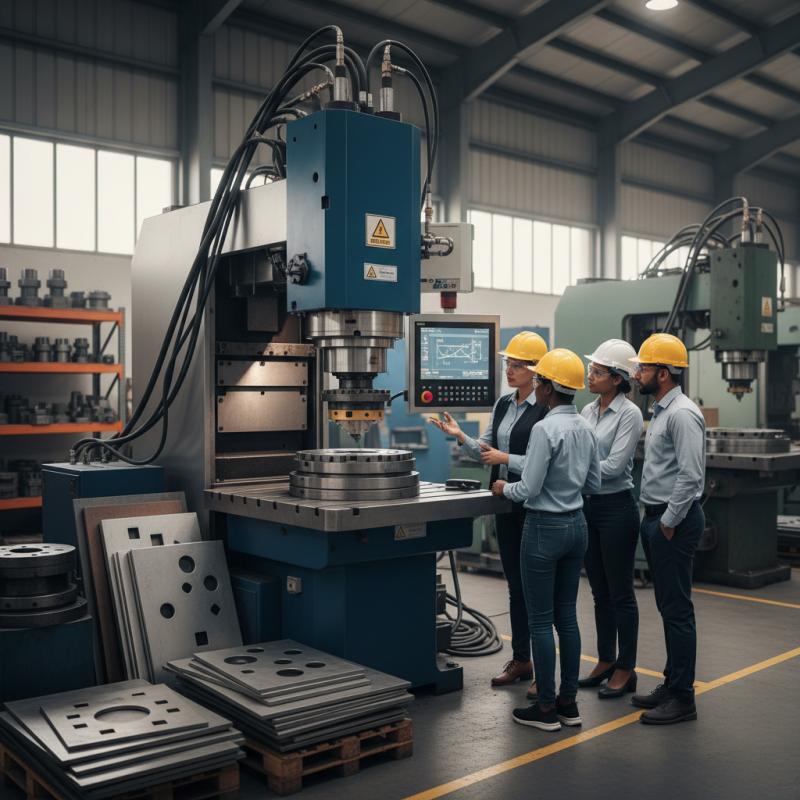
Hydraulic punching machines are essential tools in various industries. They excel in perforating different materials, including metal and plastic. These machines use high-pressure fluids to generate force, making them efficient for heavy-duty tasks. Understanding their applications can help you choose the right machine for your needs.
In construction, these machines handle metal sheeting for structural elements. In manufacturing, they create holes for bolts or rivets in assembly lines. Their versatility is impressive. However, selecting the wrong type can lead to inefficiencies. Choosing a model that matches your specific requirements is crucial.
Tip: Assess your material's thickness before buying. Some machines handle light materials, while others are built for thick metals.
Another important factor is speed. Some projects may require rapid completion, while others prioritize precision. Take time to think about your workflow. Investing in a machine that can’t keep up may lead to frustration.
Tip: Research different options and their specifications. Look for reviews to understand their performance. Always consider your future needs as well; scalability matters in manufacturing.
When selecting a hydraulic punching machine, certain factors are crucial. Understanding your specific needs is the first step. Analyze the materials you’ll be working with. Different machines handle various thicknesses and types of metal. If your work involves heavy-duty applications, a robust machine with higher force ratings is essential.
Tips: Consider machines that offer adjustable force settings. This will give you flexibility for different projects.
Another key factor is the machine's size and weight. Make sure it fits your workspace. Consider how often you will need to transport it. If mobility is a concern, lightweight options may be beneficial.
Tips: Always check for user reviews. Hearing from current users can provide insights into durability and reliability.
Don’t overlook safety features. Look for machines with automatic shut-off and safety guards. These features can prevent accidents in busy environments.
Tips: Invest in proper training for your team. It’s vital for effective and safe operation.
Choosing a hydraulic punching machine involves careful consideration. Reflect on your unique requirements to make the best decision.
Choosing the right hydraulic punching machine requires careful consideration of different types available in the market. Generally, hydraulic punching machines can be classified into several categories, including manual, semi-automatic, and fully automatic models. Each type serves unique needs within various industries, influencing both efficiency and precision.
Manual hydraulic punching machines are often favored for their durability and cost-effectiveness. According to industry reports, they are ideal for small-scale operations, allowing users to maintain control over the punch settings. However, they can be labor-intensive and slow.
In contrast, semi-automatic machines offer a balance between speed and manual control. They can significantly increase productivity with reduced operator fatigue—an outcome confirmed by a survey indicating that such machines increase output by up to 30% for medium-sized businesses.
Fully automatic hydraulic punching machines represent the pinnacle of productivity and precision. These machines often incorporate advanced technology for optimal performance. However, they come with a higher initial investment. Data shows that manufacturers see a return on investment (ROI) within two years due to increased efficiency. Yet, it is crucial for businesses to assess their specific needs and budget constraints before making a choice. Not every company that invests in automation benefits immediately; some may face challenges in adaptation and maintenance.
When selecting a hydraulic punching machine, evaluating power and capacity is crucial. Understanding the specific power requirements for your projects helps ensure efficiency. A machine with adequate power will handle thicker materials and larger punch sizes. It’s essential to assess your typical workload before making a decision.
Capacity matters too. You may often encounter projects requiring different punching sizes. Choose a machine that can adapt to varying needs. A flexible capacity allows for growth in your projects. Be mindful of the maximum and minimum limits of the machines you consider.
Reflect on your specific applications and environment. Sometimes, machines can exceed your expectations, but they might also be more than you need. Researching user experiences can provide insight into real-world performance. Balancing power and capacity against the actual requirements of your projects is key. Every choice has its trade-offs; consider them carefully.
When choosing a hydraulic punching machine, cost plays a crucial role. Budget constraints are common in many organizations. Higher cost doesn’t always mean better quality. It’s essential to analyze the features you truly need. Look for machines that offer efficient performance without excessive frills. Cheaper options might save money initially but could lead to higher expenses due to repair costs.
Maintenance is another critical factor. Consider how often the machine requires servicing. Some machines demand frequent upkeep, which can add to overall costs. A machine that appears robust may still have hidden maintenance needs. Always check user manuals and seek expert opinions on maintenance experiences. This knowledge helps avoid unexpected downtime, a scenario that can be detrimental to productivity.
Lastly, warranties provide peace of mind. A reliable warranty indicates manufacturer confidence in the machine. Look for comprehensive warranty options that cover parts and labor. Some warranties might not include essential components, so read the fine print. Evaluate whether the warranty length matches your usage plan. This consideration can make a significant difference in the machine’s overall value.
Choose wisely based on these aspects for long-term satisfaction.
: They are used for perforating materials like metal and plastic in various industries.
Assess your material's thickness and project requirements before selecting a machine.
Types include manual, semi-automatic, and fully automatic machines, each serving unique needs.
They are durable and cost-effective, ideal for small-scale operations but can be slow.
They provide a balance between speed and control, increasing output by up to 30%.
Consider the power needed for thicker materials and the capacity for varying punch sizes.
Scalability matters; choose a machine that can adapt to your growth requirements.
Yes, they offer high efficiency but require significant initial investment and careful planning.
Think about specific applications, environment, and whether a machine may exceed your needs.
Balancing power and capacity against actual project requirements is essential for efficiency.
When selecting a Hydraulic Punching Machine, it is essential to understand its various applications and capabilities. These machines are crucial for tasks requiring precise hole punching in different materials. Key factors to consider include the power and capacity needed for your specific projects, as well as the machine's operational efficiency.
Additionally, comparing different types of Hydraulic Punching Machines can help identify the best fit for your requirements. It's important to evaluate associated costs, including maintenance and warranty options, to ensure long-term reliability and performance. By taking these factors into account, you can make an informed decision tailored to your needs and maximize the efficiency of your operations.
